
Blood, Guts, and Fire by Rob Bell

The Gospel According to Leviticus

If you’ve ever read through the Bible, what did you do when you reached Leviticus? Did you cringe? Try your best to plow through it? Skip it altogether?

This year I’m reading through the Bible with a group of amazing women. But I wanted to do more than read through the Bible, I wanted to understand, learn, grow, and maybe, just maybe, know the God behind it all just a tiny bit better.

To reach that end I’ve been diving into podcasts, online bible studies, books, and other resources for each book as we read through it. Cue up Leviticus. What could possibly breathe a little life into a book filled with many, many detailed instructions on sacrifices and law after law after law.

No small task. But one taken by a very enthusiastic and dynamic preacher, teacher, speaker. I’ve been listening to Rob Bell since his Mars Hills days and I’ve actually read his books to see if all the hype and hatred have been warranted. They have not. His books bring a much needed perspective into faith conversations today. I still listen to his podcast, although I do wish he’d go back to teaching scripture. Because he’s amazing at it.

Some call Leviticus a “primitive and outdated and barbaric and strange book” but Rob describes it as “a book about justice and caring for the poor and living with intention and being a good steward of creation and making amends with someone that you’ve wronged-which are exactly the kinds of issues we’re still dealing with, thousands of years later.” Seems like we all could pay a little more attention to these sorts of things.

When he first released Blood, Guts, and Fire several years ago (only available on audio format), I definitely wanted to listen. Rob did not disappoint. In true Rob form, he brought this book of the law to life in a way that I can’t even explain. I can actually say Leviticus is one of my favorite books in the Bible and I look forward to reading it again. Blood, guts, fire, and all.

Posted in Featured Books | Tagged , , , , , | Leave a comment

What’s in Your Cart?

A friend recently recounted a story and, of course, I saw the potential for a devotional for my Abundant Living blog. With her permission, I borrowed her idea and added a bit of artistic license.

While shopping at the local grocery store one might take notice of the various items people put in their carts. Of note, two shopping carts equally filled, however the similarities stop there.

One cart filled with a rainbow of color. Rich greens of spinach, arugula, swiss chard; deep purples of egg plant, plums, beets; Bright yellows and oranges of carrots, peppers, squash, sweet potatoes, melons; vibrant reds of tomatoes, strawberries; and other flavorful items like fresh onion, garlic, cilantro, basil, bags of ground spices. The cart also has an array of hard and soft cheeses, skim milk, yogurt, and bags of beans and lentils, as well as assorted nuts and dried fruits. I imagine the amazing meals the shopper can make with the items in the cart. Filling, satisfying, and nutritious. Oh how I’d love to sit down at that table and linger over the feast.

What are the benefits of a healthy cart? More energy. Lower weight. Lower blood pressure. Disease fighting nutrients. Longer, fuller life.

The second cart equally loaded with a lot of food that can fill stomachs. Boxes and bags of highly processed, convenience foods along with equal proportions of sugary, salty junk food. Quick, easy to make, mimicking natural foods, maybe filling, satisfying for a moment, until the sugar crash sets in and leaves one hungry again. Foods definitely not very nutritious or satisfying. Even describing the contents isn’t all that fun. I imagine quick preparations, a rushed dinner, maybe even grab and go.

What are the negatives a junk filled cart? Less energy. Higher weight. Higher blood pressure. Disease causing ingredients. Shorter, more health challenged life.

How do the two carts compare to our spiritual lives? When we take a hard look at what we’re feeding our soul, can we describe it as rich, deep, bright, vibrant, flavorful, satisfying? Or is it sugar coated, salt filled, empty calories leaving us unsatisfied, devoid of energy, and always wanting more?

What might a spiritually starving diet look like? Hit or miss worship. A prayer thrown up here and there. Sporadic reading of scripture, if at all. Rushed relationships with little time for deep conversations. Hearts heavy with worry and anxiety. Attitudes of grumbling, complaining, self-seeking. A spiritually starved soul displaying anger, rage, malicious behavior, slanderous and unprofitable talk. An empty soul with nothing to give, no energy to serve, no joy to share.

In contrast, what are the essentials to a healthy spiritual diet? When we sit down to our spiritual meals, what are the things we need to have our our plates? Large helpings of teaching, reading, and study of the word. Generous portions of fellowship and healthy relationships. Dishes heaped with the breaking of bread, communion, and spiritual traditions and practices. Bowls of prayer, praise, and thanksgiving.

What are the benefits of a Spirit filled diet? Scripture tells us the fruit is love, joy, peace, patience, kindness, goodness, gentleness, faithfulness, and self control. (Galatians 5:22-23) We glow with compassion, kindness, humility, gentleness, patience, forgiveness, love, and unity. (Colossians 3:12-14) Our energy abounds with faith, excellence, knowledge, self-control, steadfastness, godliness, brotherly affection, and love. (2 Peter 1:5-7) Spiritually healthy souls share with others. Healthy hearts overflow with generosity, serving and seeking out those in need to give from our place of abundance and joy. (Acts 2:42-47)

What’s in your cart?

Posted in Abundant Living | Tagged , , , , , , | Leave a comment

Be Still Series – Reflect Update

I’m excited to say the fifth book in our Be Still series is finished, the proof copy ordered and received, edits finished, and my author copies ordered.

While I’ve worked on Reflect, I’ve also reviewed and update the other four books. Kindle Direct Publishing (KDP) was once Amazon Create Space, which is where I uploaded the first two books. However, during the development of the third, the migration to KDP took place. With it, the cover creator tool changed. During that time I also purchased a new publishing program for myself. Both have made a big difference.

Wanting consistency and continuity across the Be Still series, I formatted all five book covers and back cover descriptions to have a similar feel. I also made a few changes to some of the font in the older books, for readability and consistency.

I’m excited to think that by the time this blog posts, I the order for the first copies of Reflect will be on the way and will be eagerly awaiting their arrival. I’m also ordering additional copies of the other books for our church’s annual Artisan Fair and our neighborhood’s Craft Fair. For those who do not live in the local area, the first four books are live with their changes and available to order on Amazon. Reflect will be available in November.

Details for each book can be found on my Be Still blog page and details and ordering are available on my Amazon author page.

Grace and Peace.
Posted in Artistic Living | Tagged , , , , , , , | Leave a comment

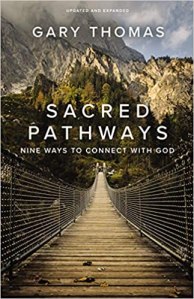
Sacred Pathways by Gary Thomas Revisited

I first posted this review in September of 2014. Since then I’ve taught two classes on Sacred Pathways and am coteaching a third. It’s a great book and a great study and now there’s also a video with five sessions and a study guide. I have seen many find freedom in their own time spent with our Heavenly Father and grace for others. It’s a book worth posting again.

 In my journey of following Jesus, I have met many who have been fairly certain their way of worshipping and praying is the right “way” to worship or pray and that other ways are wrong.   I have also met many, myself included, who have been frustrated as they struggled with the concept of the right “way” to pray, struggled with connecting with God, or have felt out of touch with certain forms of worship.  Why, for some, does connecting with God seem so easy, but for others, it is not?

Then I found Gary Thomas’ book Sacred Pathways. The ideas Thomas presents in his book were introduced to me at a prayer retreat. They intrigued me. As soon as I returned home, I ordered the book. I further explored Thomas’ concept of Sacred Pathways and discovered that 1. I am not alone in my frustration; and 2. our frustration may stem from the misconception there is a right “way” and a wrong “way” to worship and pray.

For my struggling, frustrated, journeying friends, this book is for us.  It can also be for the other group, but they may have to lay down some preconceptions and approach it with an open mind.

Gary Thomas presents the idea that God has created each of us uniquely and in doing so, we each have a unique way of loving Him. He identifies nine different spiritual temperaments, nine pathways of connecting with God.  Each of these temperaments contribute to the body of Christ and each of these temperaments, I think, teach us about the beauty and complexity of God’s heart.

As I eagerly read Thomas’ book, I quickly identified my dominate temperament. I also found that I had one or two other temperaments that were somewhat strong as well. Thomas encourages us to find comfort and confidence in worshipping God in the unique way in which He has designed us. He provides ideas to further explore worshipping God in our temperament and offers examples of others who share the temperament. Additionally, he provides cautions for the temperaments, where worship might become something destructive, lead to where our Heavenly Father did not intend. He also exhorts us to explore the other temperaments as a means to enrich our own faith journey and to better understand those whose temperaments are different from our own.

The Nine Pathways are:

Naturalists – loving God out of doors
Sensates – loving God with the senses
Traditionalists – loving God through ritual and symbol
Ascetics – loving God in solitude and simplicity
Activists – loving God through confrontation
Caregivers – loving God by loving others
Enthusiasts – loving God with mystery and celebration
Contemplatives – loving God through adoration
Intellectuals – loving God with the mind

Personal note: While Thomas combines creativity with the Enthusiasts, I would break out a tenth temperament:

Creativist – loving God through creating.

Whether music, art, dance, sewing, woodworking, writing, gardening, baking, or any other form of creating, I think we join with our Creator in the creation process and that it, in and of itself, is another form of worship, another temperament or pathway.

If you have been experiencing a dryness in your time with God, or if you have longed to have the rich spiritual walk you see others experiencing, then this book is for you. Be assured that our Heavenly Father is inviting you to experience Him in the unique way in which He has created you. Come, pray and worship, delight in the Father who delights in you.

Posted in Featured Books | Tagged , , , , , , , | Leave a comment

Shock Value

I’ve been reading through the Bible this year with an amazing group of women. Currently we’re in Ezekiel and it’s been quite the ride.

Ezekiel is filled with a considerable amount of imagery and some of it quite shocking.  In fact, Ezekiel is very much a demonstrative prophet, acting out warnings and judgments through performance in front of the people. I haven’t heard much preaching on some of Ezekiel’s actions, especially chapter 16.

As we read through the Bible, I listen to various podcasts and teaching on the books as we go. One such episode on the prophets mentioned how the messages the prophets gave were meant to shock, disturb and upset the hearers. I can’t imagine them very popular or accepted then or today.

The Lord was more than weary of the detestable actions of his people. They had lost their story, followed other gods, built their own empire, trusted in their own wealth, strength and military might. They oppressed the impoverished, the needy, the foreigner, the widows and orphans. They did not take care or look after the least of these. They only sought their own comfort, interests, and power.  

The Lord was more than done with their behavior and his prophets minced no words in warning the people. They used graphic, explicit, and even disgusting descriptions and comparisons of what Israel had done and what their judgment would be.

As Christians, we can be a bit puritanical and censorious in what we think is acceptable. Especially in the arts. Taking the book of Ezekiel into consideration, I’m not sure why.

Not long ago my oldest son streamed an animated video on his television. It was set to an amazing instrumental composition. However, the imagery and the lyrics were shocking and graphic. As the artist meant them to be. 

I’ve always been naturally hypersensitive and often easily offended and I’d simply and obviously back it up with Christian morals and piety. As I read the prophets and their warnings, I had to reconsider this particular artist’s interpretation of the ramifications and consequences of a society not unlike Israel. The creator of the video, like the prophets, used the graphic and explicit imagery to make a point, to even give warning to where it all leads.

I’m still sensitive to these things and probably won’t seek to ingest this kind of content. However, I won’t be so quick to judge, but rather pause and consider. What is the artist trying to say? What experiences is the artist trying to communicate? What is going on in our community, our society, our culture that the artist is addressing? Quite possibly the artist is protesting the problems, the corruption, the harm that has been so long ignored. A strong message is being sent. And maybe instead of judging and censoring, we should take notice, listen, and take action. Like the Israelites should have done with the message of the prophets.

Posted in the Struggle is Real | Tagged , , , , , , , , , , | Leave a comment