Miracles: and walk

Jerusalem. A cacophony of sounds. A myriad of colors. Bursting with life. Everyone from everywhere comes to her. Romans. Greeks. Egyptians. Jews. All claiming her grand walls. All seeking her fortunes. Bringing goods to sell or trade. For the Jews, another festival; they come to worship God, to offer sacrifice.

We, the small crowd of followers, dash and dodge through the people, as we hurry to keep up with the Rabbi.

“Where’s he going today?” the woman keeping pace next to me asks. They’ve accepted me now. Somewhat. At least, they acknowledge my presence without chasing me off. And even offer me bits of food now and then. I’m grateful.

We pass through the sheep gate but the crowds do not thin. If anything, they grow thicker. People, rich, poor, nobles, common. We approach the covered porches surrounding the pools and beyond the porches lies the shrine to Asclepius.

“It’s shabbat. Why are we here? Why are we not going to the temple?” another asks.

“He seems to have a purpose.”

I agree. The Rabbi’s stride does not change. He makes for one of the arches leading into the pool area. His disciples, and the rest of us, follow. The cool shade offered by the covered porches battles against the press of human body heat. Everywhere, seekers of healing swarm. They camp along the outer walls, they mill about the wide porticos, they sit on the stone steps leading down to the pools, they wade in the shallows of the ruddy waters, they even dip themselves in the depths.

As we survey the crowds, the Rabbi seems to ignore them all. He makes his way toward whatever destination he has in mind. In this place, unlike the towns in Galilee, no one recognizes him, no one gives him a second glance.

Around us, voices cry out to the heavens, to the waters, to whatever they believe will heal them. Prayers to Asclepius. To angels. To Jehovah.

Next to the steps, near one of the thick columns, the Rabbi stops. At his feet lies a grey haired, grey bearded, man on a dingy, tattered mat. An equally dingy, thin blanket covers the man’s legs. With so many people about, the man doesn’t notice the Rabbi. His eyes are fixed on the waters. His face is lined with sadness, resignation, hopelessness.

Shouts and cries burst from the crowds and the man’s eyes widen. I turn and look. At the far end of the  pool, bubbles erupt the murky surface. People surge forward. pushing and shoving each other as they scurry to the water. Several actually swim toward to the stirred up area. At the feet of the Rabbi, the man frantically claws at the stone floor as he tries to drag useless legs toward the water’s edge.

The frenzied activity stretches for long minutes and suddenly ceases with the last bubble. In the relative hush that follows, several shouts of joy echo off the walls and columns.

Throughout the entirety of the commotion, the Rabbi’s gaze never moves from the man. The man, having crawled barely a few inches, sinks back onto his mat. He quickly pulls the thin blanket back over his thin, twisted legs. He finally notices the Rabbi and his tortured eyes looks from the Rabbi to the waters and back again.

The Rabbi had offered the man no assistance. He squats down next to him.  They stare at each other.

“Do you want to be healed?” the Rabbi asks.

The man’s mouth drops open. His eyes dart again to the now still waters, save for the areas where people wade. “I have none to put me in the pool when the water is disturbed.” A simple statement. An unspoken accusation.

Another cry of joy nearby. A woman’s voice. She’s well dressed. A nobleman’s wife, I’d guess. She holds up her hands for others to see. Comments of awe and praise to Asclepius.

The Rabbi shakes his head, but his eyes remain on the man.

“When I try to get there,” the man pauses and looks at his dirty, raw, fingers, “someone goes in ahead of me.”

The Rabbi stands. He holds out his hand toward the man. “Get up.”

Confusion covers the man’s face. He opens his mouth, then gasps, staring at the blanket covering his legs. He looks back up at the Rabbi’s extended hand. He reaches out his own and takes it. The blanket falls away as the man jumps to his feet, his legs straight and muscled. He lets go of the Rabbi’s hand and laughs, a ringing sound of delight. Weary lines slip from his face, replaced by awe. He wiggles his toes and his eyes twinkle with delight. “Praise Jehovah,” he whispers.

The Rabbi smiles. “Pick up your mat. And walk.”

The man scoops up his mat and blanket and rolls them up, tucking them under his arm. He takes a tentative step. Then another. And another. His own cry of joy echoes off the walls. I watch as he stops every person in his path, points to his legs, holds up his mat. Then on to the next who will listen. Someone must have asked how, who. Because the man turns back to where he left us.

He scratches his head, a puzzled look on his face. It’s then I realize, the Rabbi has slipped away in the crowd.

Grace & Peace
Posted in Abundant Living | Tagged , , , , , | Leave a comment

Miracles: A Man’s Son

Spring flowers cover the fields and fill the air with sweet fragrance as we travel north through Samaria. I’ve now become a part of the small band of travelers who follow after the Rabbi. When he visited Jerusalem for the Passover with his disciples, some of us stayed outside the city. We waited, and then went with him when he returned to the countryside along the Jordan River, where his disciples baptized many people. When the Rabbi sets out for the north again, we follow.

We travel through Samaria and stop at a small village along the way. The disciples leave the Rabbi at the well to rest and head into the village. I watch from a distance and see him start a conversation with a woman of obviously questionable reputation.

He shows her incredible respect, despite who she is. I have not approached the Rabbi during our travels. I always keep my distance. But as I watch him talk to this woman, I  wonder would he also talk to me? What would he say? The woman’s surprise at his words and her animated responses makes me think the Rabbi understands more than she tells him. My face flushes at the thought of my past and I quickly dismiss any idea of talking to him. The disciples return and surprise and shock cover their faces when they see their Rabbi chatting with the woman. The woman rushes away but in no time she comes back with a crowd from the village. I’m surprised they even listened to her. But something in her excitement draws and engages the people. And something in the Rabbi’s message keeps them.

We finally continue north and stop in Cana again. Many of the townspeople point to the Rabbi and talk about the wine marvel at the wedding. Some stop and  talk to him. Others greet him like a brother. I see the man approaching from a distance, hurrying towards the Rabbi and his disciples. He’s dressed in the robes of an officer in the royal service, and several junior officers and numerous servants accompany him. But something in his chiseled features and resolute stride speak of desperation.

The servants retreat to the edges of the crowd, close to where I stand. As the man speaks to the Rabbi, asking him to come heal his dying son, the servants whisper among themselves about the many healers and priests of various gods the man summoned to Capernaum, paid to cure his son. Asclepius, Febris, Panacea, and even the Egyptian goddess, Isis. None had succeeded.

The Rabbi’s voice carries over the crowd. “Unless you people see signs and wonders, you simply will not trust!”

Such an odd response to the man’s wretched situation. Did the Rabbi know of the man’s previous attempts for his son’s healing? Or was he speaking to the crowds gathering out of curiosity?

“But of course,” a servant grumbles. “Healing requires spells, chants, sometimes even magic. Naturally, we expect these things.”

I’d seen healers at work before. With their herbs, their songs, their cutting on the patients and even demanding sacrifices. They reminded me of the Egyptian priests mimicking Moses. Or the priests of Ba’al in their frenzy to gain the attention of their god.

“Sir, please,” the officer implores. He falls to his knees and holds up open hands, an odd position for someone in expensive, royal robes. “Come with me, before my child dies.”

Another servant snorts and receives a knuckle in the head for his troubles.

Compassion fills the Rabbi’s face as he looks down at the man. I adjust the straps of the small pack I carry, holding my precious few belongings. I assume we would begin the trek to Capernaum with the officer.

“You may go,” the Rabbi says. “Your son is alive.”

The man looks up at him and blinks several times. So do I. The crowd falls quiet.

I hear a servant whisper, “Surely he goes with our master. A healer must see the one sick. How can he determine from afar what ails the child?”

Another servant shakes his head. “Who can heal without attending to the patient?”

The officer stands and brushes the dust from his robes. His mouth works as if he wants to say something. He pauses, and looks into the Rabbi’s eyes, then, he nods to himself, summons his junior officers, and turns. The servants scurry after him as he strides towards the town gates.

I clutch my pack to my chest. Such a long way home. What will the man find when he returns? What had he seen in the Rabbi’s eyes to make him have such trust, to leave, and take him at his word?


Grace & Peace

Posted in Abundant Living | Tagged , , , , , | Leave a comment

Miracles: Water into Wine

The wine ran out, and Yeshua’s mother said to him, “They have no more wine.”
John 2:3


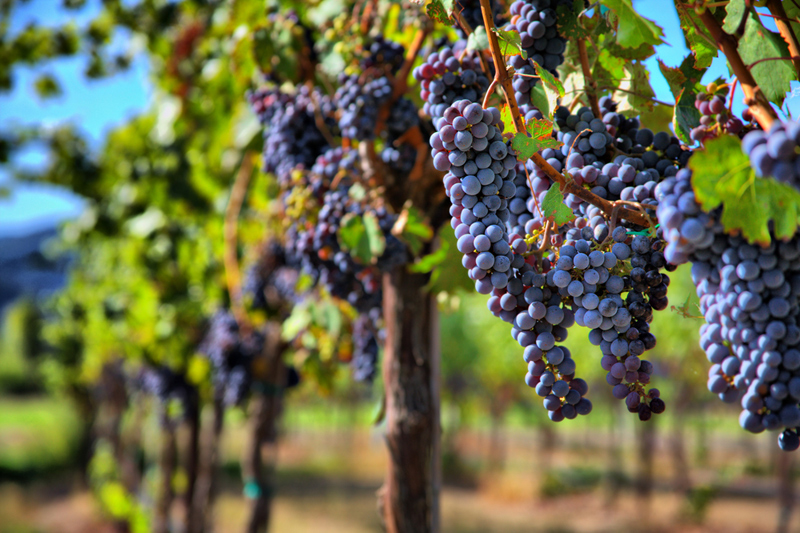
Music drifts across the cool autumn air, tumbling between the village homes, dancing over the harvested fields and dipping in and out of the rows of the now empty grape vines.
It tickles my ears, teases me, beckons me.
The whole village of Cana has turned out for the wedding. The feasts have gone late into the night and the traditional ceremonies are taken up each morning.
I have resisted the temptation to join in, for certainly someone would turn me away. But I can’t restrain myself any longer. Especially since I heard he is also here.
I don’t enter the town through the main road, crowded as it is with wedding guests coming and going. Instead, I slip between the baker’s house with its warm smell of yeast and oil, and a small, smelly pen filled with bleating sheep, most likely waiting to take their part in the feast.
I keep my head covered and my face hidden, hoping no one will recognize me. A quick glance at the merry goers tells me I should be safe, for I recognize no one.
Except him.
He strides down the street with a small group of young men. Not long ago, I had been privileged and delighted to be near the lake when he invited several of them to join him. A few are beyond the typical age of being called by a rabbi, yet they left their father’s boats and followed him. I fall in step next to some others who trail behind, not part of his company, but intrigued enough to shadow them.
As we walk, hushed murmurs slither about the townspeople. Not loud enough to be heard above the music, but seen in their faces as they discuss a matter, in an ear, behind a raised hand, in a turn of a head. With furrowed brows and pursed lips. What was causing dismay on a day of celebration?
The rabbi pauses outside the gates of a large home and a woman approaches him. Is it about the hushed secrets? As casually and indiscreetly as I can, I work my way forward until I’m close enough to catch the conversation.
“…no more wine.”
The comment darts like a hummingbird among the young men.
Eyebrows raise. Eyes widen. Mouths open.
How could they run out of wine?
Did the host not purchase enough?
Had they not expected the whole town to turn out?
I strain to hear the rabbi’s response. After all, what is he to do? He is a guest.
He looks down at the woman, a small smile playing at the corners of his mouth. “Mother, why should that concern me? — or you? My time hasn’t come yet.”
Ahh, his mother. But again, what does she expect him to do?
Yet she laughs. Then turns to the servants who accompany her. “Do whatever he tells you.” They give polite nods and wait for further instruction. The rabbi watches as she slips through the gates and disappears into the courtyard.
I hold my breath. Is he going to do something? There had been talk. That he had powers from God. But no one had seen him do anything in public yet.
Yet.
Others in the street slow and stop, adding to the gathering crowd.
The rabbi turns back to his small group of men and says something only they can hear. Oh, to be privy to his private comments. He then looks to the servants and to a row of tall jars standing along the wall next to the gates. To these he nods. “Fill them with water.”
Surprise blossoms on their faces. It quickly vanishes and they hurry away. Throughout the village, music still plays, conversations still buzz and laughter still breaks by those unaware of the crisis. Those of us who are aware, wait.
The servants return, carrying barrels of water, which they pour into the jars, then hurry away again. Three times they pour, until the six jars are filled. The rabbi steps closer and inspects each one. “Now draw some out.”
Again surprise covers their faces. And hesitation. But one of the servants plucks the ladle hanging next to the jars and dips it in. Another servant presents a cup to which the liquid is poured. Deep, rich, red liquid. Sparkling in the afternoon sun.
Gasps escape from the lips of everyone watching. Including mine.
Another smile plays on the rabbi’s lips. “Take it to the man in charge of the banquet.”
The other servants open the gates wide for the one with the cup to enter.
Of course the others follow. But slowly, because each one pauses to look into the jars and wonder at their contents.
I remain behind as the rabbi and his men go inside; I dare not be bold enough to enter the home. I glance around. From the folds of my cloak I pull out the chunk of bread I lifted from one of the servant’s trays when she wasn’t looking. I edge my way closer to the nearest jar and peak in. Dark red liquid reflects the sky above. I dip a corner of the bread into it. Red quickly soaks in. I bring it to my lips and taste. Spicy rich flavors fill my mouth.
Inside the house, the music pauses and hush falls.
I quickly retreat and climb up and sit a wall where I have a view of the gates.
Then a burst of joy, a shout carries through an open window. “Quickly, call the bridegroom. Bring him here.”
The rest is lost in the jubilation as the celebration starts up again. The musicians take up a lively tune that make one’s feet itch to tap and move.
The gates open and the servants return, shooing away those dipping fingers and tasting the wine. They pick up the jars and take them into the courtyard.
The news scampers with delight about the townspeople. Loud enough to be heard above the music, shouted from one to another across the street, proclaimed from the corners, told with awe and wonder.
From my perch on the wall, I watch the gates as I nibble on the rest of the wine soaked bread.
And wait.

Grace & Peace

Posted in Abundant Living | Tagged , , , , , | Leave a comment

Miracles: This Man

This man. Jesus.

“Men of Isra’el! Listen to this! Yeshua from Natzeret (Jesus from Nazareth) was a man demonstrated to you to have been from God by the powerful works, miracles and signs that God performed through him in your presence. You yourselves know this. This man was arrested in accordance with God’s predetermined plan and foreknowledge; and, through the agency of persons not bound by the Torah, you nailed him up on a stake and killed him!
“But God has raised him up and freed him from the suffering of death; it was impossible that death could keep its hold on him.
Acts 2:22-24 (CJB)

As Oak Hills embarks on a series on the miracles of Jesus, I too want to take a closer look at this man, the one we call Savior, Messiah, the Christ. But I’d like to get up close and personal, to see the dust he raises as he walks, to see the sweat upon his brow, to see the emotion in his eyes. I’d like to hear to hear the murmurs, the cries, the arguments of the crowds. I’d like to see the miracles, talk to those Jesus healed, touch their healed bodies, hear their testimonies, and wonder at it all.

Yeshua (Jesus) went about all the towns and villages, teaching in their synagogues, proclaiming the Good News of the Kingdom, and healing every kind of disease and weakness. When he saw the crowds, he had compassion on them because they were harried and helpless, like sheep without a shepherd.
Matthew 9:35-36 (CJB)

I follow from a distance. For what would this Rabbi, this healer, this prophet have with me? But I, I want what he had to offer. So I follow. I have followed him from one little town to the next. Down dusty roads. Up steep inclines. Through ravines. Across rocky terrain. And I’m not the only one. With each town, this man, Jesus, adds to the number of people following after him.

If news of his arrival reaches the town before he does, which is often the case, the crowds come out to greet him. I usually find a place, something I can climb up, somewhere I see over the mass of humanity and watch. They bring with them everyone who is ill, those suffering from various diseases and pains, and even the demon possessed.

And he stops. He listens to each one. He touches them. And it happens. I’ve seen it. A lame man walks. A blind woman sees. A child with a withered hand is made whole. Even the ones tormented by evil spirits are freed. So many. So many. It’s amazing to watch.

I squint my eyes in the hot afternoon sun, shading them with a grimy hand, trying to get a glimpse of him through the swarming, pressing crowds. Several of his disciples stand around him and urge the people to leave some room, to keep a space cleared for him, to provide a place where he can teach. But the people are desperate. They are lost, overwhelmed, hurting, sick, broken, hopeless. And his words have Life. Power. Promise. So, they press in.

This town is different than the others. Natzeret. The crowds say its where he grew up. Surely the people must be excited to have him home. Undoubtedly they will have some sort of feast in his honor. Certainly he will do great things here.

He is speaking, but in this place, unlike the hillside outside the last town, his words do not carry enough for me to hear so far away. Against my better judgment, I slip between those in front of me. For my efforts I receive a jostle, an elbow in the face, a shove backward. But I’m not angry. They suspect who I am. And if they don’t, I know they, like me, must also want what he has to offer.

I cast a quick glance around the area, then scramble up and perch on the side of a nearby cart. I can see better, but instead of hearing him, I only hear the murmurs of those around me.

“Where do this man’s wisdom and miracles come from?” one man asks. But it’s skepticism in his voice, not curiosity.
“Isn’t he the carpenter’s son?” a young woman comments.
An older woman nods. “Isn’t his mother called Miryam? and his brothers Ya‘akov, Yosef, Shim‘on and Y’hudah?”
Heads bob up and down. And another woman adds, with a sweep of her hands toward a young women standing with a couple of older girls. “And his sisters, aren’t they all with us?”
A older man crosses his arms and glares toward Jesus and his disciples. “So where does he get all this?”

The murmurs work their way forward, jumping from lips to lips, until they reach the front.

From my adventageous position, I see him with a furrowed brow. He slowly turns, eyes moving from face to face. “Who will come?” he calls.

The crowd buzzes, but no one steps forward, no one cries out.
No one? No lame? No deaf? No demon possessed? Don’t they want healed? Don’t they want what he has to offer?

With a visible sigh, he shakes his head. “The only place people don’t respect a prophet is in his home town and in his own house.”

The crowd buzzes all the more loudly, like a swarm of angry bees. He says nothing more. He leaves, followed only by his disciples, and heads into town.

As the crowd disperses, I remain where I am. And I wonder.
Why could this man not perform any miracles in this place?

Grace & Peace

Posted in Abundant Living | Tagged , , , | Leave a comment

On Prayer

One thing I continually come back to.
A conversation that truly never ceases.
An ongoing discussion.
A time of wrestling. A pouring out of pain.
A place of refuge. A sanctuary. A place of peace.
Cries for courage. Pleas for help. Appeals for justice.

Invocation.
Petition.
Intercession.
Supplication.
Call it what you will.

Prayer.

The thirst, the longing, the yearning, the hungering.
For more. For life. For mercy. For blessings. For gifts.
For He who is all in all. He who is our everything. He who is all we need.

It seems the more we consider, explore, study, learn, and practice,
the more we discover how much more there always is.
For prayer is not the thing. But the means, the method, the vehicle, to know
He who is beyond all knowing (Ephesians 3:18-19),
He who is unsearchable (Romans 11:33),
He who is beyond comprehension (Psalm 147:5),
He who is inexpressible joy (1 Peter 1:8).

Yet we are invited in.
To step behind the veil into the most holy place (Hebrews 6:19)
To confidently enter his presence (Ephesians 3:12)
To boldly approach his throne of grace (Hebrews 4:16)
To seek his face (1 Chronicles 16:11)
To pray about all the time and in every occasion (Ephesians 6:18)

He tells us to call to Him
and he will tell us unsearchable things we do not know (Jeremiah 33:3)
How great is that? How awesome? How unfathomable.
That our God desires our company and our conversation.

May our discussion with our Father, our Creator, our Author, our Perfecter,
continue
Pressing in, pressing on, to consider, explore, study, learn and practice.

Let us fall in step with the great cloud of witnesses who have gone before us.
The Psalmists, of course, in their poems, prayers, and songs in the book of Psalms
and so many others…
Prayer: Does it make any Difference (Philip Yancey)
Speak, Lord (Vic Black)
Before Amen: The Power of a Simple Prayer (Max Lucado)
Fervent (Priscilla Shirer)
Power of Praying series (Stormie OMartian)
Draw the Circle (Mark Batterson)
Prayer (Timothy Keller)
Method for Prayer (Matthew Henry)
How to Pray (C.S. Lewis)
Prayer (A.W. Tozer)
Breakthrough Prayer (Jim Cymbala)
Power through Prayer (E.M. Bounds)
Becoming the Answer to Our Prayers (Shane Claiborne and Jonathan Wilson-Hartgrave)
Sacred Pathways (Gary Thomas)

And let us pray, because our Savior did and does (Romans 8:34 and Hebrews 7:24-25))

Our Father in heaven,
    may we keep your name  holy in all we say and do
May your Kingdom come soon.
May your will be done on earth, in our lives, in our hearts
    as it is in heaven.
Give us today the food we need, 
and forgive us our sins,
    as we have forgiven those who sin against us.
And don’t let us yield to temptation,
    but rescue us from the evil one
for yours is the power and glory and the honor forever
Amen

Posted in Abundant Living | Tagged , , | Leave a comment